40”×50”
Oil on Canvas
In the Hall of Ma’at draws from the Egyptian Book of the Dead, where each soul must enter the Hall of Ma’at to have its heart weighed. In this ritual, the heart is placed on a scale opposite the feather of Ma’at, the symbol of truth and moral balance. If the heart is lighter than the feather, the soul is granted passage into the afterlife. If it is heavier, burdened by falsehood and imbalance, the soul is lost. It is a test of inner truth, measured not by others but by the weight of one’s own heart.
The piece reflects the quiet turmoil that follows the collapse of a relationship in which no resolution is ever reached. Without closure, the mind returns to the moment again and again, weighing fault, intention, and integrity. The figure twists into an almost impossible knot, mirroring the mental contortions involved in trying to decide whether one has acted rightly or simply wants to believe so.
The serene face contrasts with the strained pose and captures the divide between outward calm and the unseen work of moral self examination. In this suspended moment, the painting holds the question that remains long after conflict ends: What does it mean to judge one’s own heart, and by what standard can truth be known?
40”×50”
Oil on Canvas
In the Hall of Ma’at draws from the Egyptian Book of the Dead, where each soul must enter the Hall of Ma’at to have its heart weighed. In this ritual, the heart is placed on a scale opposite the feather of Ma’at, the symbol of truth and moral balance. If the heart is lighter than the feather, the soul is granted passage into the afterlife. If it is heavier, burdened by falsehood and imbalance, the soul is lost. It is a test of inner truth, measured not by others but by the weight of one’s own heart.
The piece reflects the quiet turmoil that follows the collapse of a relationship in which no resolution is ever reached. Without closure, the mind returns to the moment again and again, weighing fault, intention, and integrity. The figure twists into an almost impossible knot, mirroring the mental contortions involved in trying to decide whether one has acted rightly or simply wants to believe so.
The serene face contrasts with the strained pose and captures the divide between outward calm and the unseen work of moral self examination. In this suspended moment, the painting holds the question that remains long after conflict ends: What does it mean to judge one’s own heart, and by what standard can truth be known?

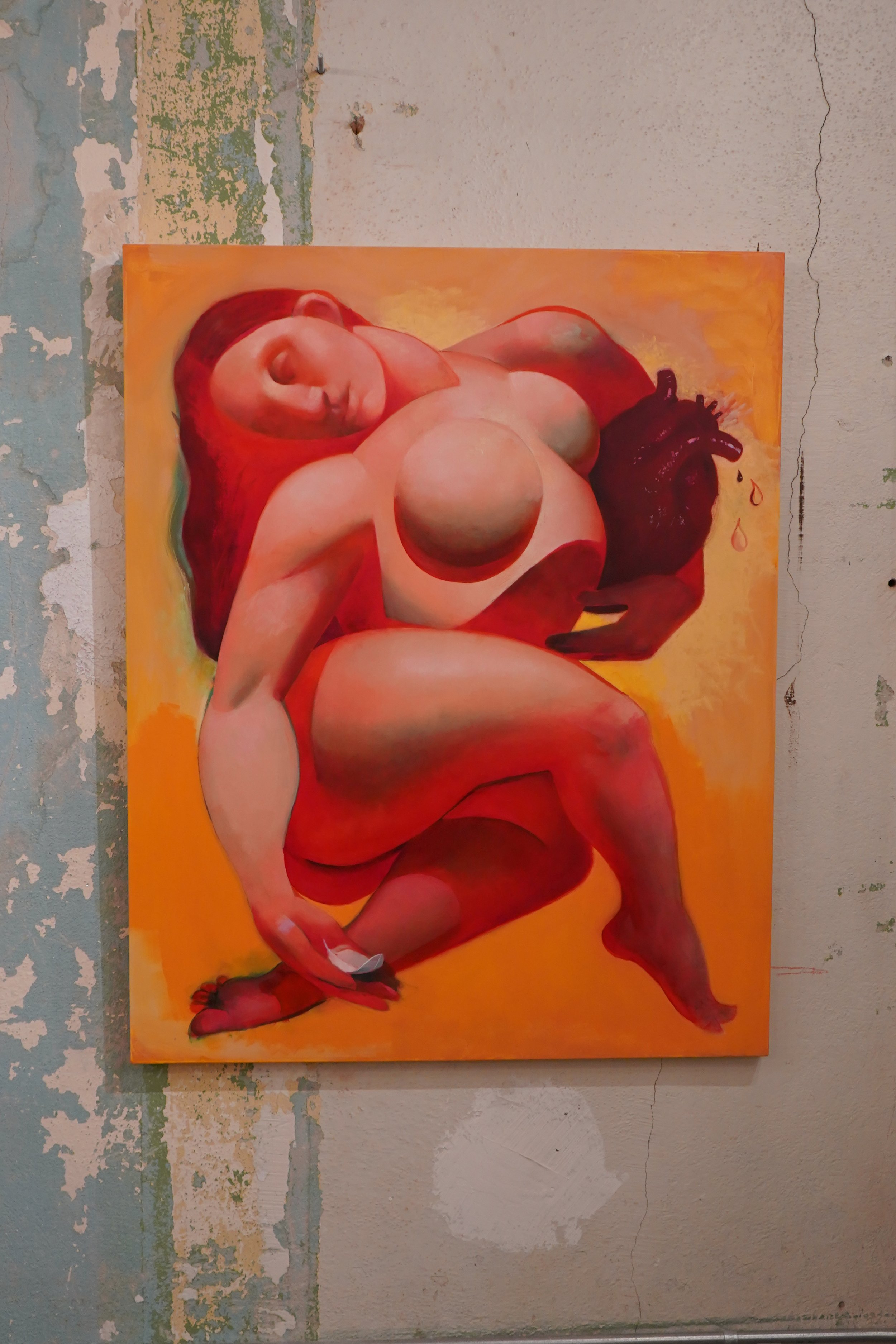 Image 1 of 6
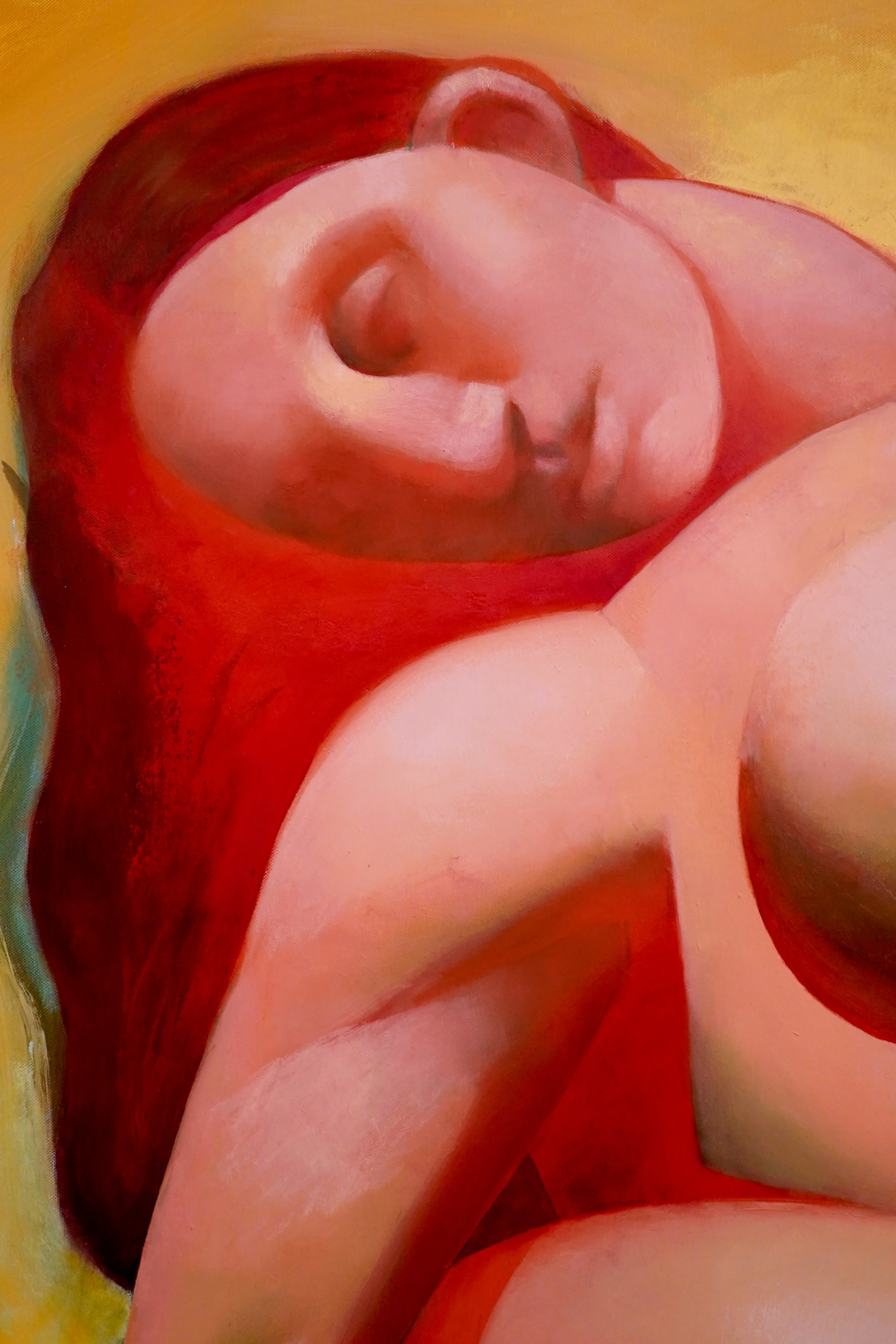 Image 2 of 6
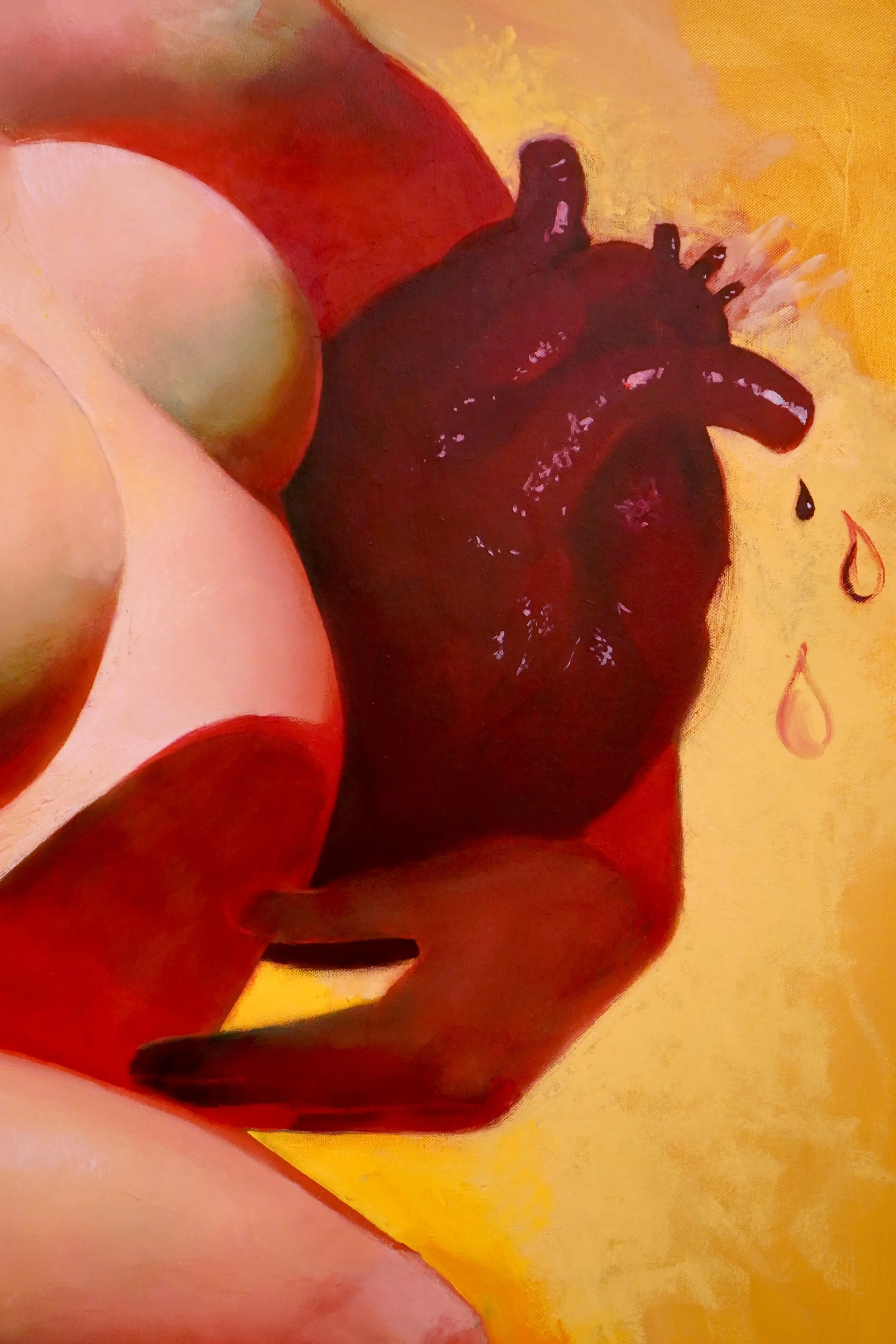 Image 3 of 6
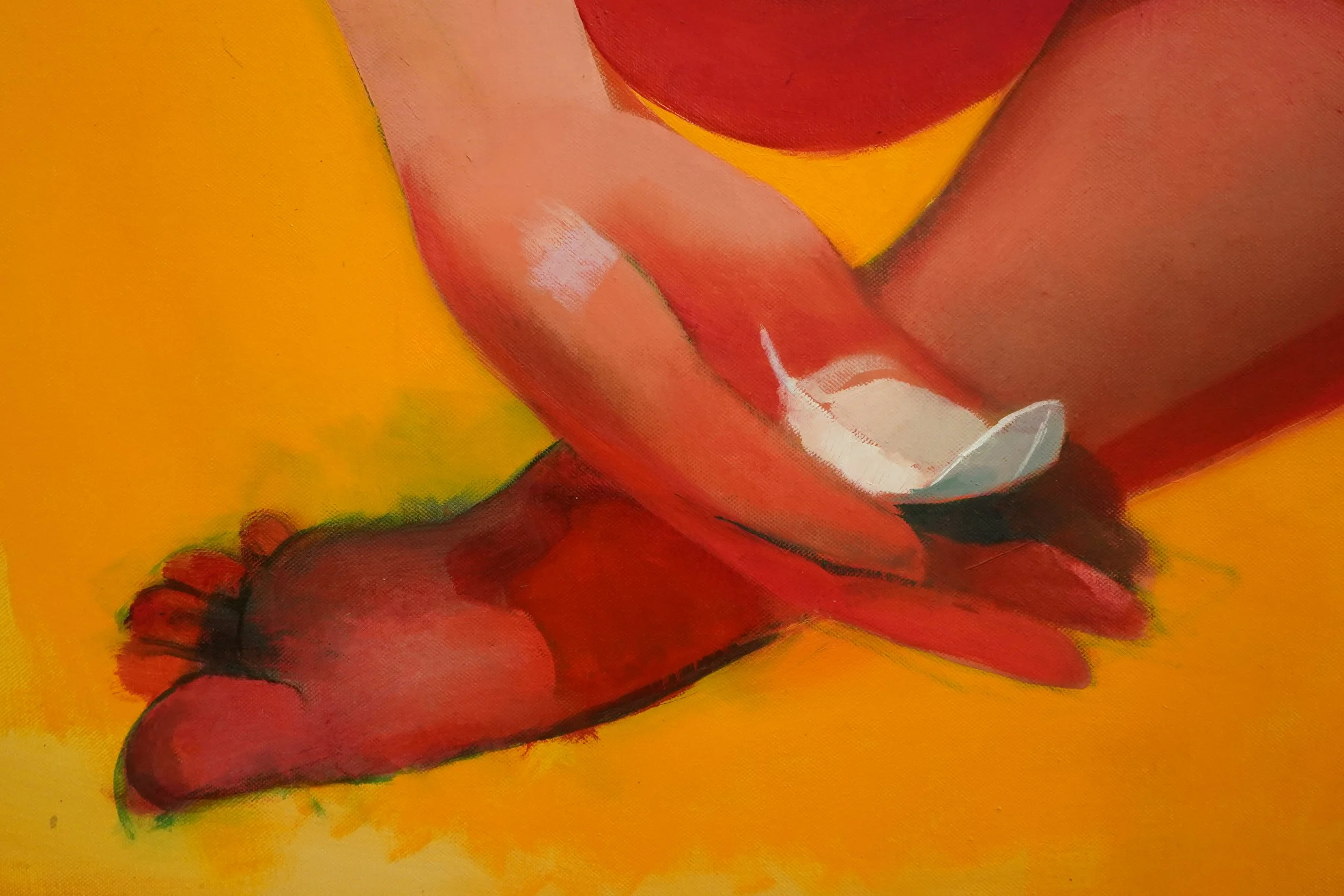 Image 4 of 6
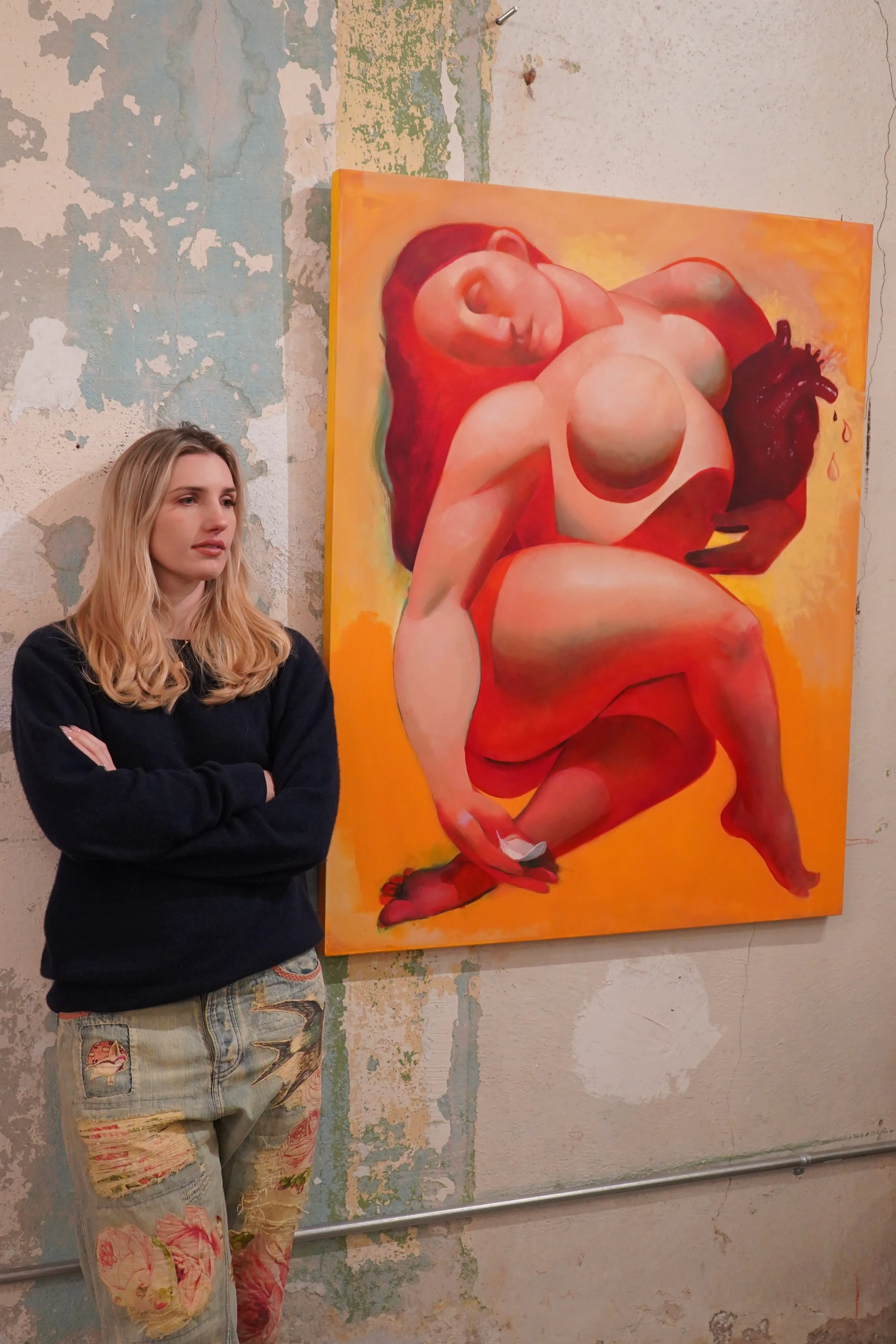 Image 5 of 6